


The first dialogue and workshop on flying fox hunting in South Sulawesi, Indonesia
July 13, 2018
Comments are off
On Wednesday, May 30, 2018, about 32 people gathered at Universitas Hasanuddin, South Sulawesi, to have a dialogue about flying fox hunting in the region. The event was part of the US Fish and Wildlife Service funded project “Identifying and addressing factors contributing to flying fox trafficking in Southeast Asia, which has been awarded to the Philippine-based Mabuwaya Foundation and jointly implemented by partners in Indonesia (in this case, Tambora Muda Indonesia), Malaysia, the Philippines
Continue Reading →SEABCRU Priorities

Outreach
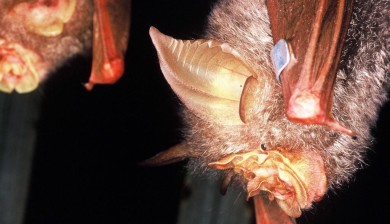
Despite their contribution to regional biodiversity, their ecological and economic importance, and their imperiled status, public awareness of the conservation and economic value of bats in Southeast Asia is extremely low, and myths and prejudice abound. Consequently one of the objectives of the SEABCRU is to facilitate the development and implementation of outreach programs.
SEABCRU News
The first dialogue and workshop on flying fox hunting in South Sulawesi, Indonesia
On Wednesday, May 30, 2018, about 32 people gathered at Universitas Hasanuddin, South Sulawesi, to have a dialogue about flying fox hunting in the region. The event was part of the US Fish and Wildlife Service funded project “Identifying and addressing factors contributing to flying f
July 13, 2018
Comments are off
Funding Opportunities — Threatened Species
Two recent funding opportunities are available for work that focuses on species recovery or conservation. They both emphasize explicit conservation action of threatened species, so proposals need to be very focused on this to be competitive. 1. National Geographic “Recove
Good News – Flying Fox Protection in Malaysia
Good news for flying fox conservation! In conjunction with recent media coverage highlighting the importance of flying foxes for durian, Peninsular Malaysia’s Department of Wildlife and National Parks have announced that they are taking concrete steps to protect the country’s two flyi
Kate Barlow Award 2018 for graduate research benefitting bat conservation
Applications to the 2018 Kate Barlow award are now open the closing date is 5pm, 4th December 2017. The Kate Barlow Award aims to encourage the next generation of bat researchers by providing a substantive contribution towards the research costs of postgraduate students undertaking re
Decline of flying foxes could affect the durian industry
An international team of researchers working in Peninsular Malaysia have found that the giant fruit bats known as flying foxes (Pteropus hypomelanus) are actually important pollinators for the durian (Durio zibethinus) tree, which produces a unique fruit that is highly popular through
Scientists find a new species of horseshoe bat from Southeast Asia by studying an old museum specimen
A team of international network of researchers describes a new species of woolly horseshoe bat from Southeast Asia (Malaysia, Indonesia and Thailand). The new species is described from specimens in museums world-wide including a 32 years old spirit specimen. The study (led by SEABCRU
A dark knight with pads – a new Glischropus species from Sumatra
They have typical Pipistrellus appearance but are characterized by the thickened pads at the base of thumbs. They roost in bamboo stalks but are not the flat-headed Tylonycteris of Southeast Asia nor the funnel-eared Kerivoula of Taiwan. The genus Glischropus is a group of small vespe
Foraging ecology of Lyle’s flying fox revealed by GPS tracking
Flying foxes are of ecological importance to Old World plants that depend on them for pollination and seed dispersal; however they are globally threatened by habitat loss and hunting. Lyle’s flying fox is of particular interest because it is a host for the Nipah virus, it frequently l